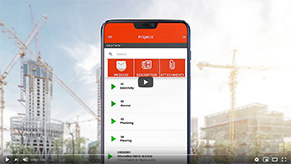
Internal communication refers to all the actions and tools a company uses to share information with its employees. It covers exchanges between management and teams, between managers and employees, and among employees themselves. It is also referred to as “organizational communication” or, in a digital context, live chat and instant messaging for real-time exchanges.
In SMEs and especially in industries with field-based teams (construction, services, maintenance, transportation) internal communication is used to:
It often relies on push notifications to deliver information at the right moment, without delay.
External communication targets clients, partners, and the general public. Its goal is to raise awareness of the company.
Internal communication, on the other hand, targets only employees.Its purpose: to ensure everyone is working in the same direction, with the same information, in real time.
The practical result: fewer misunderstandings, better day-to-day employee management, and faster responsiveness in the field.
When teams are constantly on the move, instant messaging becomes a real coordination asset:
To avoid information overload and keep exchanges meaningful:
Top-down communication flows from management to teams (instructions, announcements). Bottom-up communication goes from the field to management (issues, suggestions). Lateral communication flows between colleagues, regardless of hierarchical level. A strong strategy combines all three.
SMEs and field-based teams tend to favor mobile tools: an instant messaging application integrated into their management software, push notifications, and shared scheduling boards. The key is to centralize exchanges within a single dedicated tool rather than spreading across multiple channels (personal SMS, WhatsApp, email).
It starts with usage rules: define what counts as urgent, organize exchanges by topic, keep push notifications to a strict minimum, and avoid off-topic discussions. A dedicated communication tool (rather than personal channels) helps keep exchanges traceable and professional.
In most contexts, yes. “Organizational communication” is the more academic term. In a business setting, “internal communication” is the more commonly used expression.
Mobile-Punch saves thousands of companies time and money. Call us to find out how we could do the same for yours!
We are located at:
5955, rue Saint-Laurent
Lévis, Quebec
G6V 3P5