26 May, 2026
Mobile-Punch
SHARE
CCQ Status Letter: a complete guide for contractors
In Quebec’s construction industry, trust between project owners, general contractors, and subcontractors does not rest on word alone. It relies on official documents that confirm each party’s compliance with their legal obligations. Among these, the status letter issued by the Commission de la construction du Quebec (CCQ) plays a strategic role that is often underestimated. For a contractor, knowing when to request it, how to obtain it, and how to read it can mean the difference between a secure job site and a costly dispute. Here is what you need to understand concretely in 2026.
What is a CCQ Status Letter?
The CCQ status letter is a service offered by the CCQ to employers in the construction industry. It provides a snapshot of an employer’s file with respect to their obligations under the Act R-20 at the precise moment it is issued. This document is governed by the Regulation respecting status letters, which sets out the conditions for issuance and the information the letter may contain.
In practical terms, the letter allows a project owner or general contractor to assess the risk associated with a subcontractor before signing a contract or releasing a payment. It is distinct from a simple certification: it is not an absolute seal of compliance, but rather an administrative snapshot that reveals whether debts, complaints, or orders are currently weighing on the employer in question.
There are two types of letters:
- The letter for bid purposes, which a subcontractor may provide voluntarily to demonstrate their reliability during a tender process.
- The letter for construction work carried out on a job site, which may be required throughout a project to verify a subcontractor’s compliance prior to payment.
Why this letter has become essential
The CCQ status letter is not just another administrative formality, it is a legal protection tool directly tied to Section 54 of Act R-20. This section establishes joint liability between a contractor and their subcontractor for wages owed to workers. In other words, if a subcontractor has not paid the wages owed to their employees, the general contractor may be held responsible for that payment, even if they have already settled their own invoice.
This is precisely the risk the letter helps assess. By reviewing the status of contributions, civil claims, and orders targeting a subcontractor, the general contractor can decide to withhold certain amounts, require corrective action, or, in serious cases, terminate the contractual relationship.
For contractors managing multiple job sites and multiple subcontractors simultaneously, requesting this letter has become a standard risk management practice just like verifying an RBQ licence or a CNESST compliance certificate. It is also a reflex that public project owners and major private managers now systematically require in their contract documents.
What information does the letter contain?
The content varies depending on the type of letter requested, but certain elements appear in most cases. The letter may indicate:
- Information about the project provided by the applicant (nature and duration of the work, designation of the project owner, contract value, assigned workforce, list of subcontractors);
- The status of contributions owed to the CCQ and compliance with monthly reporting obligations;
- The status of civil claims, along with the grounds for contestation and amounts held as security, where applicable;
- Orders to suspend work and any pending revision requests;
- Transmission of the applicant’s registration notice;
- Certain information concerning the employer’s directors, shareholders, officers, or partners.
Reading the letter in its entirety is essential: an employer who appears compliant on the first page may have active claims or pending orders mentioned further in the document.
How to obtain a CCQ status letter
For an employer to request a letter, several conditions must be met. The company must be registered with the CCQ, hold a valid licence from the Régie du bâtiment du Quebec (RBQ), provide all required information (including the complete list of subcontractors for a job site letter), and have paid any outstanding prior registration and letter issuance fees.
Since the regulatory update, all requests must be submitted through the CCQ’s Online Services (SEL). Paper requests are no longer accepted. A fee of $30 applies per letter issued, and processing time is generally short when the employer’s file is up to date.
For project owners and general contractors requesting a letter regarding one of their subcontractors, it is the subcontractor who must submit the request to the CCQ; the document is then transmitted to all relevant parties.
Preparing your business to handle a letter request
Receiving a request for a CCQ status letter means being subjected to a real-time administrative review. A compliant file reassures the project owner and speeds up contract awards. Conversely, a file with late contributions, outstanding CCQ monthly reports, or active wage complaints can delay a payment or even cost you a tender.
Three administrative habits make all the difference in staying ready at all times:
- Submit your CCQ monthly reports on time and without errors. This is the foundation of any compliance. A precise, digital timesheet fed in real time from the job site prevents the vast majority of discrepancies that end up appearing in a status letter.
- Maintain a reliable daily activity and payroll log. The CCQ may refer to it during an audit, and the data it contains directly feeds into monthly report production.
- Centralize timestamped punch records by job site. Having a clear, time-stamped, and exportable record of hours worked per employee and per project code protects the contractor in the event of a wage complaint from a worker.
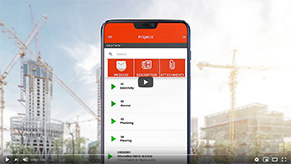
Contractors who use a mobile time tracking app that complies with Act R-20 have a significant advantage: their hours data is collected in real time, their CCQ monthly reports are generated almost automatically, and their records are ready to be presented upon request. For those managing multiple job sites simultaneously, Mobile-Punch’s project management app also allows hours to be broken down by project, which simplifies all administrative tracking tied to a specific job site.
Mobile-Punch includes a wide range of reports and one of those reports can be used directly to prepare your attestation requests, with all the information required for your submissions.
A mutual protection for all parties on the job site
The CCQ status letter is not just a monitoring tool imposed by project owners, it is also a protection for serious subcontractors, who can concretely demonstrate their compliance against less rigorous competitors. To learn more about the CCQ’s exact role in this ecosystem, the ACQ regularly publishes legal columns on regulatory developments and enforcement practices.
For Quebec construction contractors, the question is no longer whether their file will be reviewed, but when. Having reliable attendance data, up-to-date monthly reports, and a solid administrative system ensures that a CCQ status letter request becomes a simple routine, not a stressful moment that puts a contract at risk.
Recent Articles

8 September, 2026 • Mobile-Punch
R-20 Compliant Timesheet: How to Keep It Right? A Guide for Construction Employers
On a job site governed by Bill R-20, the timesheet is not just an internal management tool: it is the…

28 July, 2026 • Mobile-Punch
CCQ Travel Expenses: How to Automate Mileage Calculations? An Employer’s Guide
In Quebec’s construction industry, CCQ travel expenses show up on your workers’ pay every single week. The amount you owe…

11 June, 2026 • Mobile-Punch
Mobile-Punch vs ProgressionLIVE: which software should you choose to manage your field teams?
Choosing software to manage your field teams is never a trivial decision. A handful of solutions exist in Quebec and…